
Service
Tile to Colorbond conversions, done properly
We do tile to Colorbond Melbourne conversions on homes where the tiles are past restoring, or where a lighter, simpler roof makes more sense.
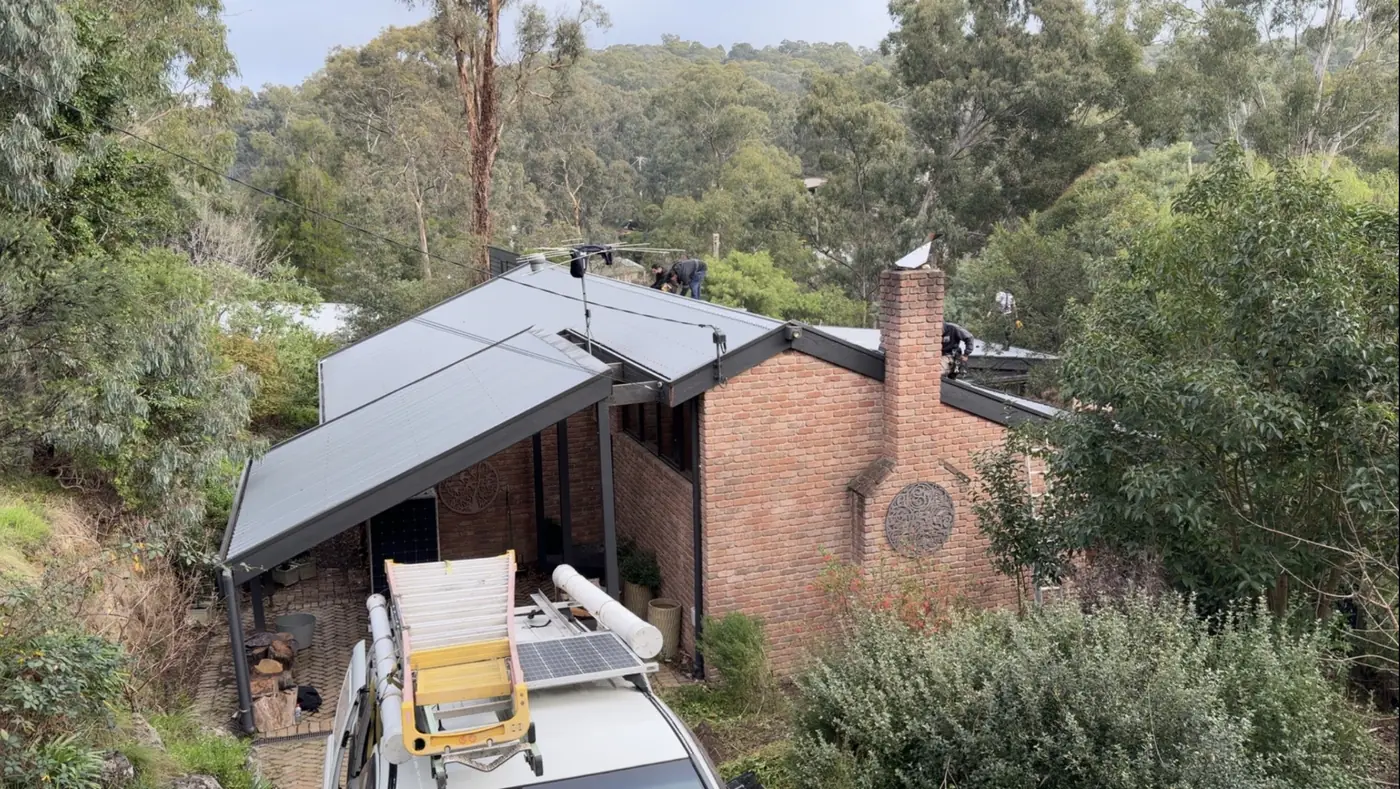
We do tile to Colorbond Melbourne conversions on houses where the tiles are past restoring, where solar is on the way, or where an owner simply wants a lighter, lower maintenance roof. The old tiles and battens come off, the frame is checked and repaired, new sarking goes down, and the house is reroofed in Colorbond steel with new flashings throughout.
Converting is common on Melbourne housing from the fifties, sixties and seventies, where concrete tile roofs are now old enough that restoration is getting harder to justify. This page explains when it makes sense, how the job runs, and what to check before you commit.
Why owners convert
- The tiles are porous, chalky or delaminating, and a coating would only hide it
- The roof has been patched many times and keeps leaking
- Solar panels are planned and the tile roof will not outlast them
- Weight: steel sheeting weighs a fraction of what concrete tile does, which takes load off an older frame
- Fewer joints and no ridge mortar, so less ongoing maintenance
- A change of look, especially when renovating or extending
When it does not make sense
If your tiles are still hard and the problems are at the ridge capping and a few broken tiles, a roof restoration will usually cost much less and last well. Conversion is not automatically an upgrade. It is the right choice when the tiled roof has reached the end of its useful life, or when what you want from the roof has changed.
Heritage overlays and permits
Many inner north streets in Merri bek and Darebin, and parts of Moonee Valley, sit within heritage overlays. Changing a roof from tile to metal changes how the house looks from the street, and in a heritage overlay that may need a planning permit. Colour and profile can also matter. Check with your council before you sign anything. We can provide photos and roof measurements to support an application.
Our process
Inspect and measure. We get on the roof, photograph its condition and measure it properly. You get a written quote that compares restoring with converting where both are realistic.
Specify. We agree on profile and colour. Corrugated profiles suit older and period style homes. Wider ribbed profiles suit low pitches and contemporary houses. The pitch decides which profiles will drain properly.
Strip. Tiles and battens come off in sections and go into a bin. The roof is never left open overnight; whatever is stripped during the day is covered or sheeted before we leave.
Repair the frame. With the tiles off, the frame is visible. Any rotten or damaged timber is photographed and you get a call before we fix anything beyond the quote.
Sarking, battens and insulation. New sarking goes down as a secondary water barrier, then battens at the right spacing for the sheet. This is the moment to add an insulation blanket if you want one, which also helps with rain noise.
Sheet and flash. Sheets are laid and fixed, then ridge capping, barge flashings, valley flashings and every penetration flashing go on. Chimneys, skylights, vents and solar mounts all need proper flashing. This is where a conversion succeeds or fails.
Gutters and downpipes. Often worth replacing at the same time, so the whole roof drains as one system. We photograph the existing gutters and coordinate replacement where it is needed.
Materials
Colorbond steel comes in a set range of colours and several profiles. Lighter colours reflect more heat; darker ones absorb more. Matching flashings in the same or a complementary colour finish the job, along with gutters if they are being replaced. Sarking and, if you choose, an insulation blanket go under the sheets.
What you receive
- A written quote with inspection photos, and a restore versus convert comparison where both are realistic
- Photos of the frame and battens once the tiles are off, before anything is covered
- A call with photos before any extra work
- A photo report of the finished roof and every flashing
- Old tiles removed from site and the yard left clean
Proof on every roof matters most on a conversion, because the sarking, battens and flashings are hidden by the end of each day. You see them before they disappear.
How long it takes
A typical single storey house is one to two weeks, depending on size, weather and what the frame looks like once the tiles are off. Double storey homes and roofs with many valleys or a chimney take longer.
Planning around solar
If you already have solar panels, they need to come off for a conversion and go back on afterwards, usually by a solar installer. If you are planning solar, converting first means the panels go onto a new roof that should outlast them, with mounts fixed to the steel rather than through tiles. Either way, we coordinate the timing so the house is not without its roof or its panels for longer than necessary.
Noise, heat and comfort
The most common worries about steel are rain noise and heat. Both come down mostly to what goes under the sheets. Sarking, and an insulation blanket if you choose one, deaden rain noise and cut heat transfer considerably. Colour matters too: a lighter roof reflects more summer sun. We talk through the options at the inspection.
Price guidance
A conversion costs more than a restoration and usually less than people fear. What moves the number:
- Roof area, number of planes, hips and valleys
- Repairs to the frame once the tiles are off
- Profile and colour, insulation, and gutter replacement
- Access, scaffold and double storey work
- Removal and disposal of the old tiles
As a broad guide only, commonly published Melbourne figures for converting a typical tiled house to Colorbond often start in the mid teens of thousands and run past $30,000 for larger or complex roofs. Your roof may sit outside that range. Our roof restoration cost guide in News helps you compare the two options side by side. The free inspection gives you real figures for both.
Restore or convert
If you are not sure, the inspection answers it. We will show you the photos and tell you which we would choose for our own house: a roof restoration, a reroof in new tile, or a conversion to Colorbond.
How we do it
Step 1: Steel reroof under way 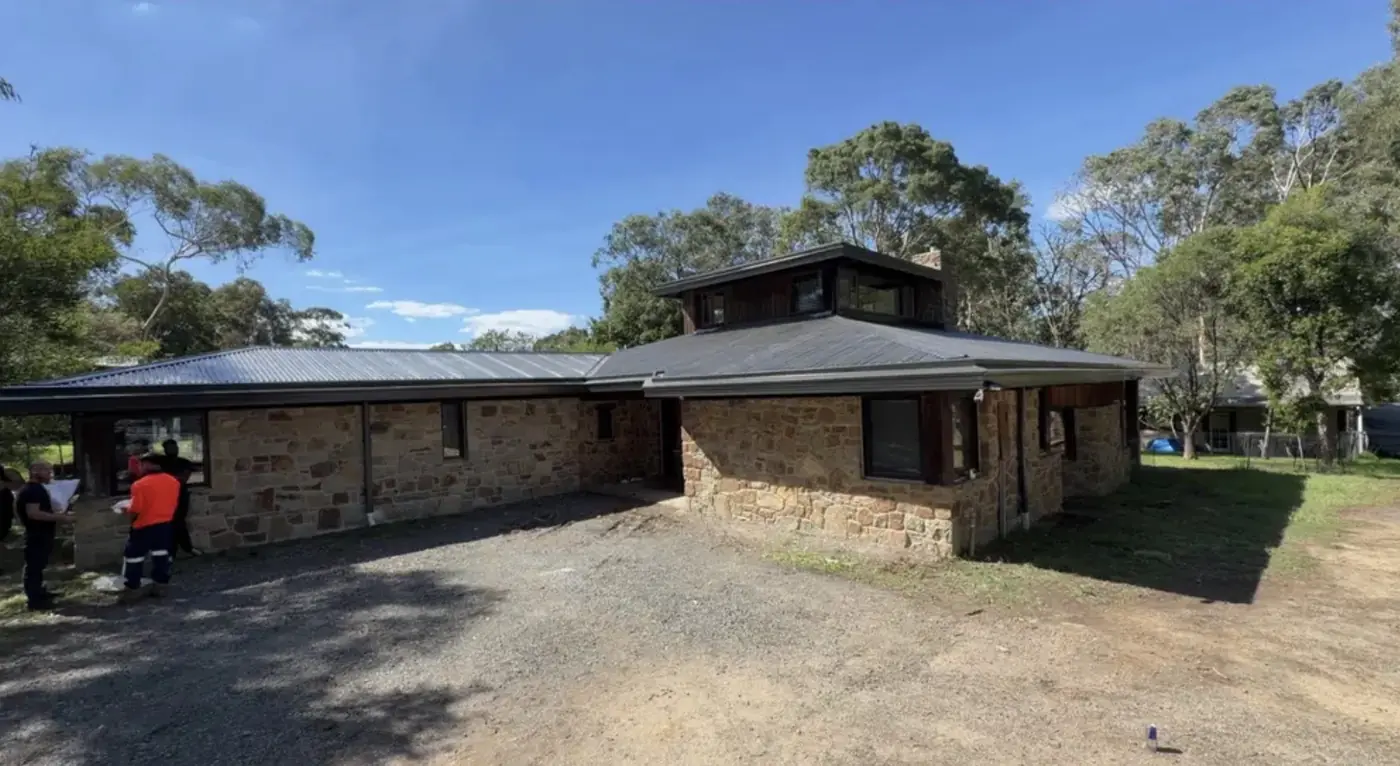
Step 2: Finished steel roof on a stone house 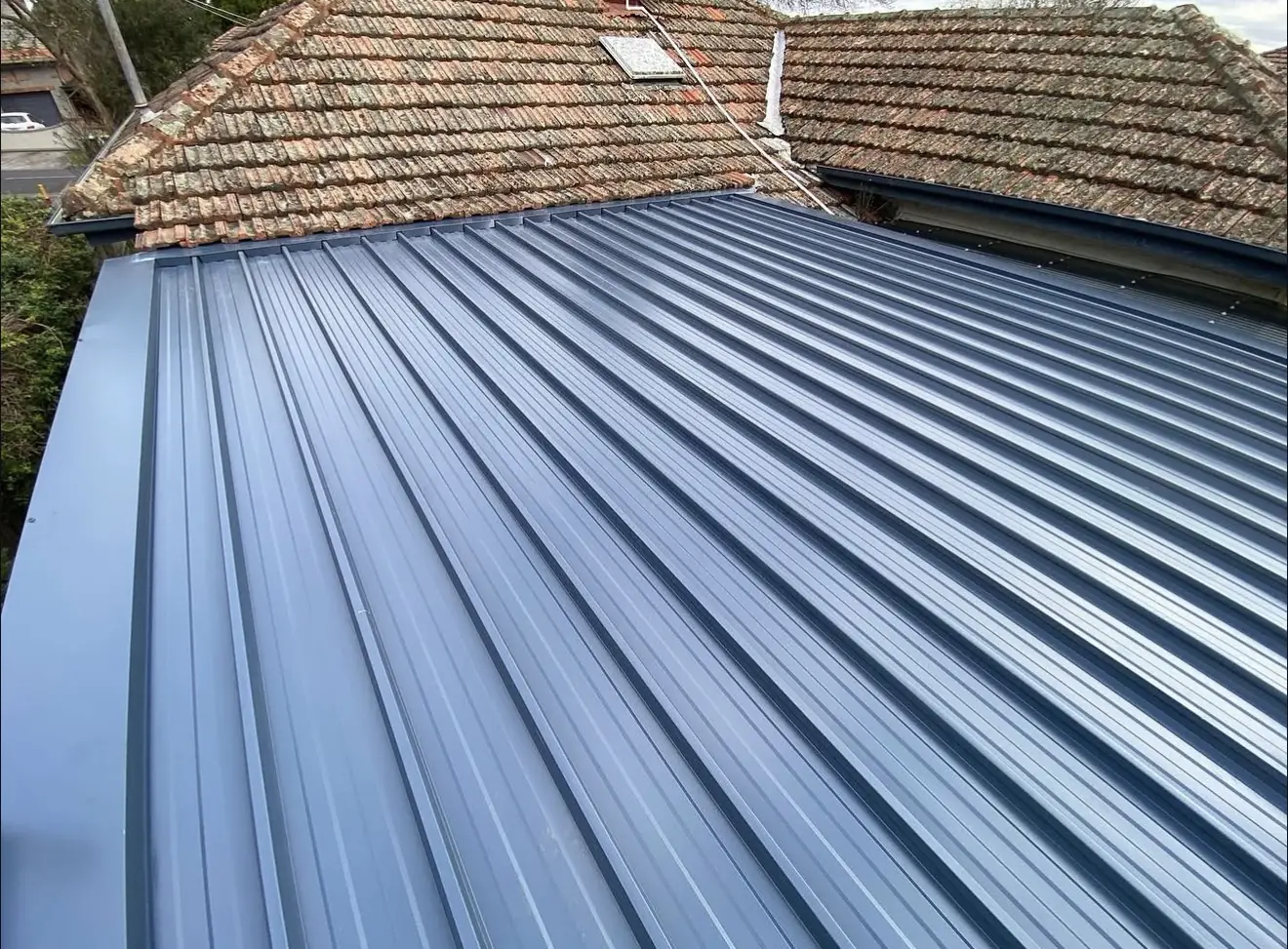
Step 3: New steel sheeting meeting an existing terracotta roof
Questions about tile to Colorbond
Can you convert a tiled roof to Colorbond?
Yes, and it is common on Melbourne homes from the fifties to the seventies. The existing frame usually copes easily, because steel weighs much less than the tile it replaces. We check the frame once the tiles are off.
How much does tile to Colorbond cost in Melbourne?
It depends on roof area, complexity, frame repairs and access. As a broad guide, commonly published figures for a typical house often start in the mid teens of thousands. The free inspection gives you a real number.
Do I need a permit to change from tile to Colorbond?
Possibly. In a heritage overlay, changing roof material can need a planning permit. Check with your council, whether that is Merri bek, Darebin, Moonee Valley or another, before you commit.
Is a Colorbond roof hotter or noisier?
With sarking and an insulation blanket under the sheets, heat and rain noise are well controlled. Colour choice also affects how much heat the roof absorbs.
Where we work
Get your free roof inspection
Send a few details and photos. We call back within 2 hours, Mon to Sat.
Mon to Sat, 7am to 6pm. Emergency call outs 24/7.