Guides · · 5 min read
Repointing vs rebedding: which one does your roof actually need?
Repointing and rebedding get quoted like they are the same job. They are not. One seals the ridge, the other rebuilds what it sits on, and picking the wrong one is how a roof ends up back in the same state two summers later.
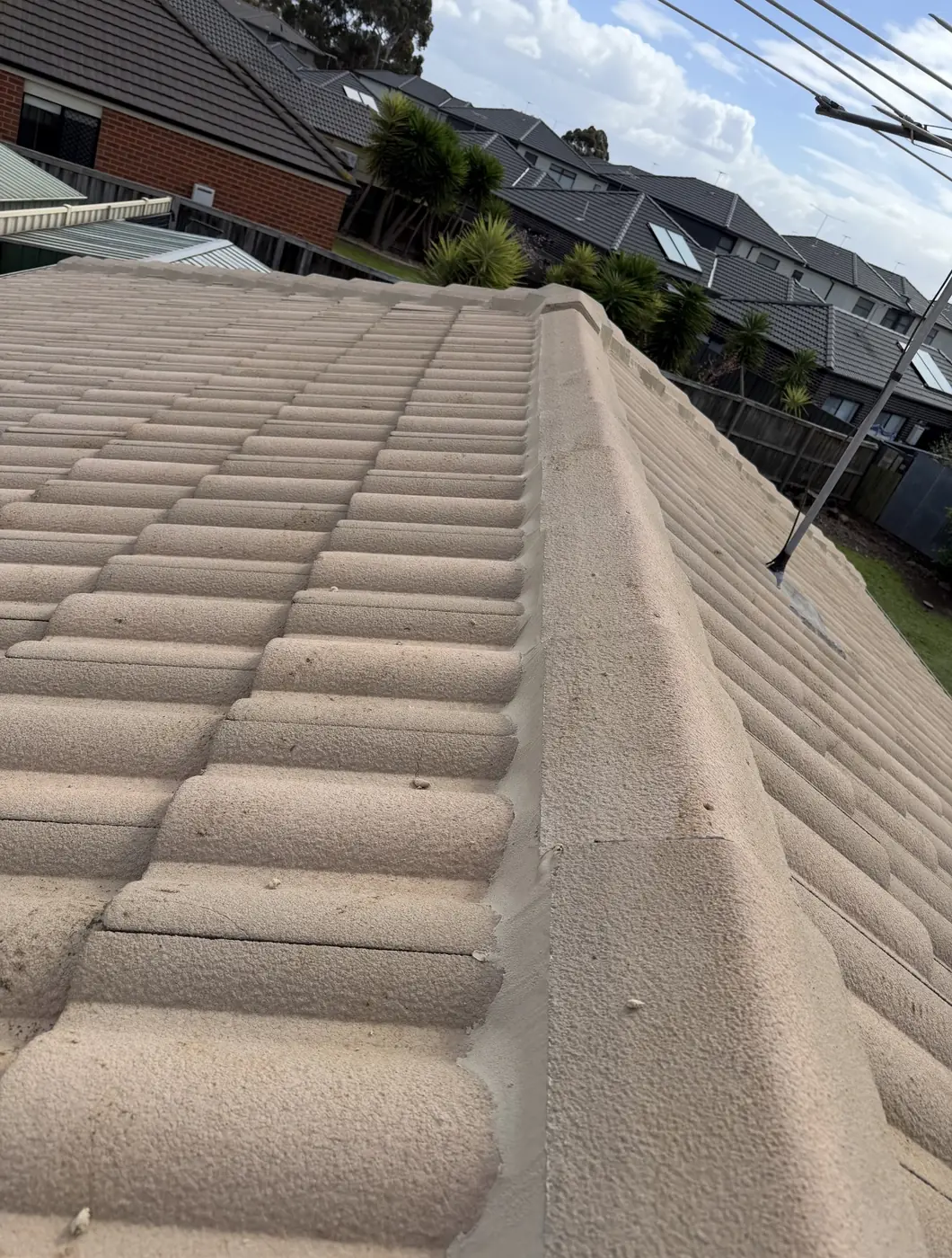
Repointing vs rebedding is the question we get asked most on tiled roofs, and it matters because the two jobs fix different problems. Your ridge caps, the rounded tiles along the top and down the hips of a tiled roof, sit on a bed of mortar. That bed is then sealed with a pointing layer. Over time either part can fail. If you fix the wrong one, the roof looks good for a while and then fails in exactly the same place.
Here is how the two jobs differ, how to tell which one you need, and the shortcut to watch out for.
What is bedding and what is pointing?
Bedding is the mortar the ridge cap actually sits in. It is the structural part. It holds the cap in place, to line, and stops it moving in wind.
Pointing is the finishing layer applied over the joint where the cap meets the tiles. It seals the bedding from the weather and gives the ridge its clean finished line. These days it is done with a flexible pointing compound that moves with the roof instead of cracking.
Think of bedding as the foundation and pointing as the seal on top. A good seal on a failed foundation does not last.
Repointing vs rebedding: the difference in the work
Repointing
Repointing means cleaning back the old pointing and applying a new layer of flexible pointing over sound bedding. The caps stay where they are. It is quicker and costs less, and when the bedding underneath is still solid, it is the right answer.
Rebedding
Rebedding means lifting the ridge caps, stripping the old mortar back to sound material, laying fresh bedding, setting the caps back to line, letting it go off, and then pointing over the top. It is more work because it is the whole job, not just the finish.
Rebedding always ends with repointing. Repointing does not include rebedding. That is the part that gets lost in a lot of quotes. More detail on how we do both is on our repointing and rebedding page.
How to tell which one your roof needs
You can get a rough idea from the ground. The real answer comes from getting on the roof and touching the caps.
Repointing is usually enough when:
- The pointing has fine cracks or has gone chalky, but is still mostly in place
- The caps sit straight and firm and do not move when pressed
- The mortar underneath is hard and solid where the pointing has come away
Rebedding is usually needed when:
- Ridge caps rock or shift when touched
- Mortar crumbles to sand when you press it, or falls out in chunks
- You find mortar on the ground or in the gutters after wind
- The ridge line has gone wavy, with caps sitting out of line
- The roof is older and still on its original bedding, which is common in suburbs like Coburg and Pascoe Vale
Many roofs are a mix. One hip has sound bedding and only needs pointing, while the main ridge has gone and needs rebedding. A proper quote should say which sections get which treatment, not lump it all under one line.
The shortcut to watch out for
The most common corner cut in this trade is pointing straight over failed bedding. From the street it looks brand new. Fresh colour, clean lines. Underneath, the caps are still sitting on mortar that has let go. Within a couple of years the pointing cracks away, water gets under the caps again, and you are paying for the same job twice.
Ask anyone quoting your ridge capping these questions:
- Are you rebedding, repointing, or both, and on which sections?
- Will you lift the caps and strip the old mortar?
- What happens if you find the bedding is worse than expected once you start?
- Will I get photos of the bedding before it is covered?
If the answers are vague, that tells you something.
Why it matters for leaks
Failed bedding is one of the most common causes of leaks on tiled roofs, and one of the hardest to spot from inside. Water gets under the cap, runs along the timber, and drops somewhere else entirely. If you have a leak that only shows up in driving rain, the ridge is a good first suspect. Our leak repairs page explains how we trace water back to the real entry point.
Do you need a full restoration instead?
Not always. If the tiles are sound and only the capping has failed, repointing or rebedding on its own is the honest answer and costs far less than a restoration. If the tiles are also cracked, porous or covered in moss, it can make sense to do the capping as part of a full roof restoration, since the roof is being cleaned and worked on anyway. We will tell you which one makes sense for your roof.
Get the ridge checked properly
We get on the roof, check the caps by hand, and photograph the bedding and pointing so you can see for yourself which job you need. Call 0420 541 479 or send a quote request, and we will call you back within 2 hours, Mon to Sat, 7am to 6pm. The inspection is free and we are fully insured.